
Your Gut Microbiome and You
Published:
Download here!
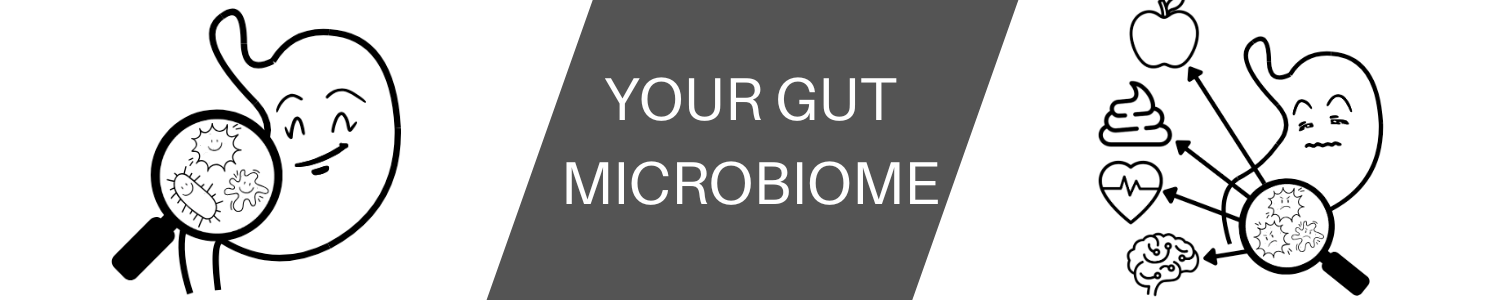
About the Book
Some microbes make us sick, but others keep us healthy! Your tummy is home to trillions of helpful microbes that help you digest food, fight off infections, and more. How can you take care of your gut microbiome? This book was written during my postdoc in the Garud Lab, where I studied evolution in the microbiome.
For Educators
Working with educators from a diverse range of disciplines and locations, this books was developed with the Next Generation Science and Common Core Standards in mind. I hope that from homeschool to public school, you will find my books both fun and educational.
This coloring book meets the following Next Generation Science Standards:
- K-LS1.1: Use observations to describe patterns of what plants and animals (including humans) need to survive.
- 1-LS1.2: Read texts and use media to determine patterns in behavior of parents and offspring that help offspring survive.
- 3-LS2.1: Construct an argument that some animals form groups that help members survive.
- 3-LS3.2: Use evidence to support the explanation that traits can be influenced by the environment.
- 3-LS4.3: Construct an argument with evidence that in a particular habitat some organisms can survive well, some survive less well, and some cannot survive at all.
- MS-LS1.1: Conduct an investigation to provide evidence that living things are made of cells; either one cell or many different numbers and types of cells.
- MS-LS1.3: Use an argument supported by evidence for how the body is a system of interacting subsystems composed of groups of cells.
- MS-LS2.1: Analyze and interpret data to provide evidence for the effects of resource availability on organisms and populations of organisms in an ecosystem.
- MS-LS2.4: Construct an argument supported by empirical evidence that changes to physical or biological components of an ecosystem affect populations.
And the following English Language Arts Common Core Standards:
- 5.2: Determine two or more main ideas of a text and explain how they are supported by key details; summarize the text.
- 5.3: Explain the relationships or interactions between two or more individuals, events, ideas, or concepts in a historical, scientific, or technical text based on specific information in the text.
- 5.4: Determine the meaning of general academic and domain-specific words and phrases in a relevant text.
- 5.7: Draw on information from multiple print or digital sources, demonstrating the ability to locate an answer to a question quickly or to solve a problem efficiently.
- 3.10: By the end of the year, read and comprehend informational texts, including history/social studies, science, and technical texts.
- 3.7: Use information gained from illustrations (e.g., maps, photographs) and the words in a text to demonstrate understanding of the text (e.g., where, when, why, and how key events occur).