
Darwin Day
Published:
Download here!
About the Book
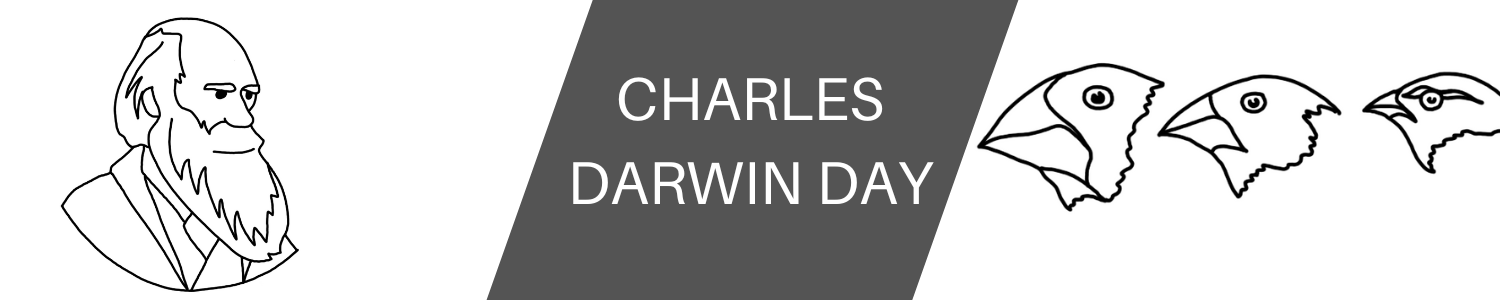
This book was made to celebrate Darwin Day, an international celebration of intellectual bravery and curiosity in honor of Charles Darwin’s birthday. This interactive coloring book shows who Charles Darwin was and how he contributed to the field of evolution, explains how organisms adapt to their environments, and introduces other important evolutionary biologists.
For Educators
Working with educators from a diverse range of disciplines and locations, this books was developed with the Next Generation Science and Common Core Standards in mind. I hope that from homeschool to public school, you will find my books both fun and educational.
This coloring book meets the following Next Generation Science Standards:
- 3LS1.1: Develop models to describe that organisms have unique and diverse life cycles but all have in common birth, growth, reproduction, and death.
- 3LS4.3: Construct an argument with evidence that in a particular habitat some organisms can survive well, some survive less well, and some cannot survive at all.
- MSLS1.4: Use argument based on empirical evidence and scientific reasoning to support an explanation for how characteristic animal behaviors and specialized plant structures affect the probability of successful reproduction of animals and plants respectively.
- MSLS1.5: Construct a scientific explanation based on evidence for how environmental and genetic factors influence the growth of organisms.
And the following English Language Arts Common Core Standards:
- 5.2: Determine two or more main ideas of a text and explain how they are supported by key details; summarize the text.
- 5.3: Explain the relationships or interactions between two or more individuals, events, ideas, or concepts in a historical, scientific, or technical text based on specific information in the text.
- 5.4: Determine the meaning of general academic and domain-specific words and phrases in a relevant text.
- 5.7: Draw on information from multiple print or digital sources, demonstrating the ability to locate an answer to a question quickly or to solve a problem efficiently.
- 3.10: By the end of the year, read and comprehend informational texts, including history/social studies, science, and technical texts.
- 3.7: Use information gained from illustrations (e.g., maps, photographs) and the words in a text to demonstrate understanding of the text (e.g., where, when, why, and how key events occur).