
Microbe Madness
Published:
Download here!
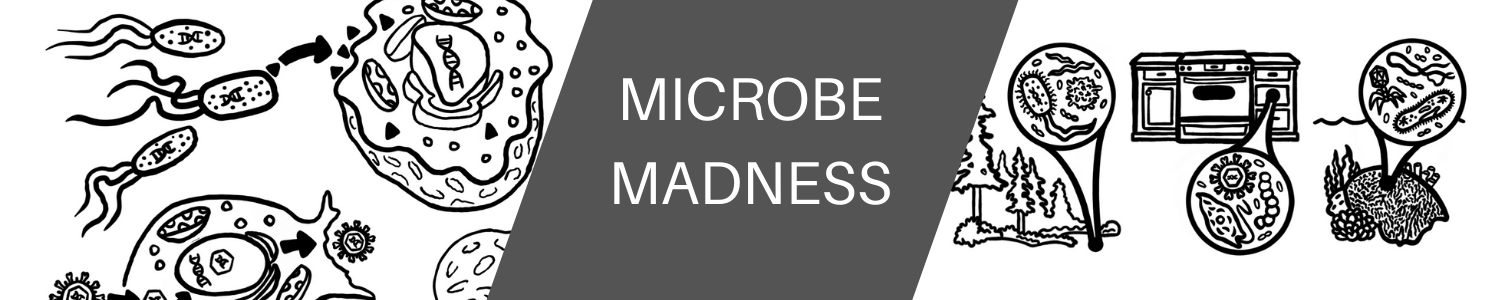
About the Book
This book was developed in partnership with the Brown Junior Researchers, a graduate student run orgnaization that aims to connect students and scientists. This book was developed as part of the curriculum for a six week module developed to teach students from grades 4-7 about microbes.
For Educators
Working with educators from a diverse range of disciplines and locations, this books was developed with the Next Generation Science and Common Core Standards in mind. This book was specifically designed to accompany a module developed with the Brown Junior Researchers. If you would like us to come to your classroom and teach this six week module, please reach out. I hope that from homeschool to public school, you will find my books both fun and educational.
This coloring book meets the following Next Generation Science Standards:
- LS1.1: Conduct an investigation to provide evidence that living things are made of cells; either one cell or many different numbers and types of cells.
- LS1.2: Develop and use a model to describe the function of a cell as a whole and ways parts of cells contribute to the function.
- LS1.5: Construct a scientific explanation based on evidence for how environmental and genetic factors influence the growth of organisms.
- LS2.1: Analyze and interpret data to provide evidence for the effects of resource availability on organisms and populations of organisms in an ecosystem.
- LS2.2: Construct an explanation that predicts patterns of interactions among organisms across multiple ecosystems.
- LS2.4: Construct an argument supported by empirical evidence that changes to physical or biological components of an ecosystem affect populations.
And the following English Language Arts Common Core Standards:
- 5.2: Determine two or more main ideas of a text and explain how they are supported by key details; summarize the text.
- 5.3: Explain the relationships or interactions between two or more individuals, events, ideas, or concepts in a historical, scientific, or technical text based on specific information in the text.
- 5.4: Determine the meaning of general academic and domain-specific words and phrases in a relevant text.
- 5.7: Draw on information from multiple print or digital sources, demonstrating the ability to locate an answer to a question quickly or to solve a problem efficiently.
- 3.10: By the end of the year, read and comprehend informational texts, including history/social studies, science, and technical texts.
- 3.7: Use information gained from illustrations (e.g., maps, photographs) and the words in a text to demonstrate understanding of the text (e.g., where, when, why, and how key events occur).